EUDI Wallets

Connect to the European Digital Identity Wallet ecosystem

Interact with wallets and data sources across Europe through a single, compliant, and secure integration.
header_eudiw header_eudiw

One connection to a trusted digital Europe

The European Digital Identity Wallet (EUDI Wallet) is changing how citizens and businesses share identity data across Europe. But connecting to this ecosystem - and keeping up with its rapid evolution - is not straightforward.

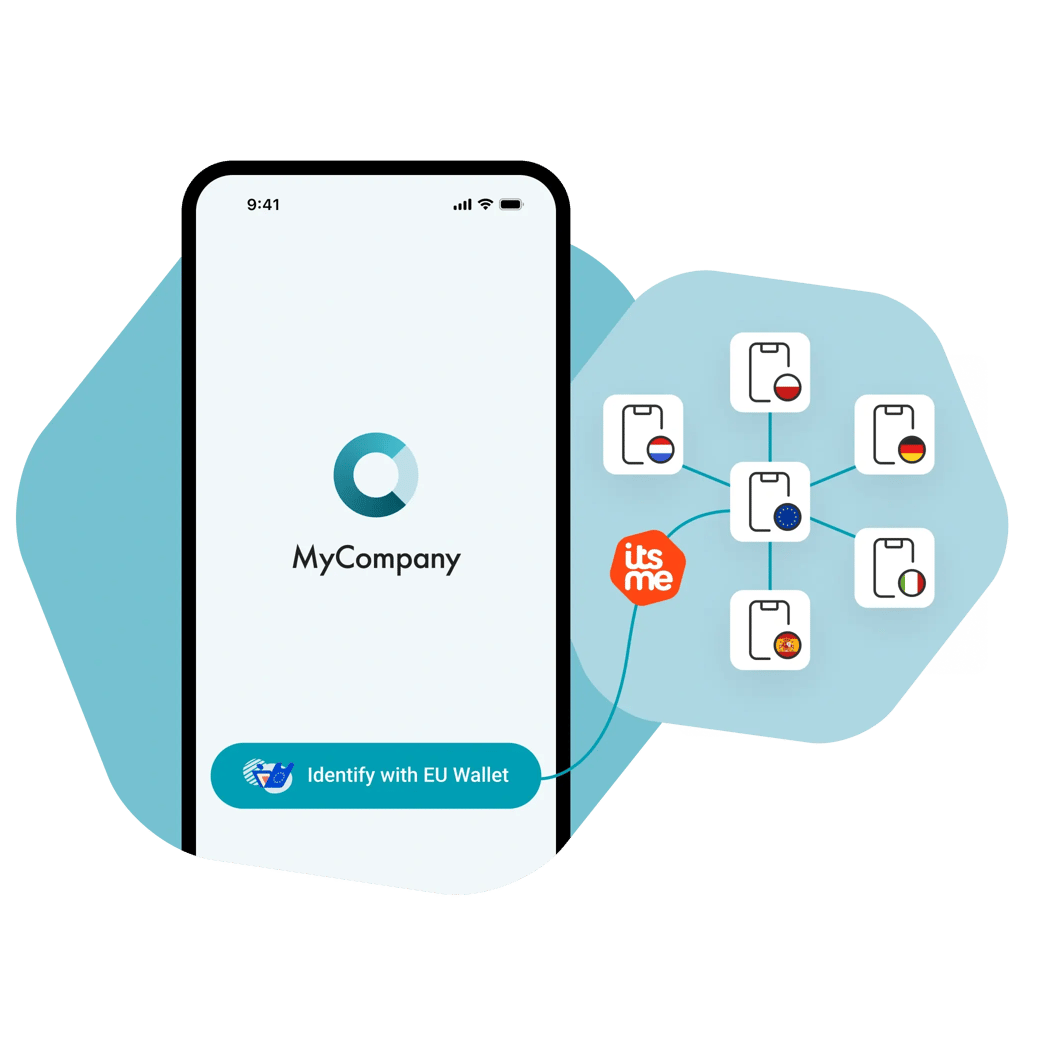
The itsme EUDI Wallet Intermediary service acts as a trusted bridge between your organisation and the European Digital Identity Wallet ecosystem. We abstract regulatory complexity, technical fragmentation, and trust requirements. So you can focus on delivering value to your users.

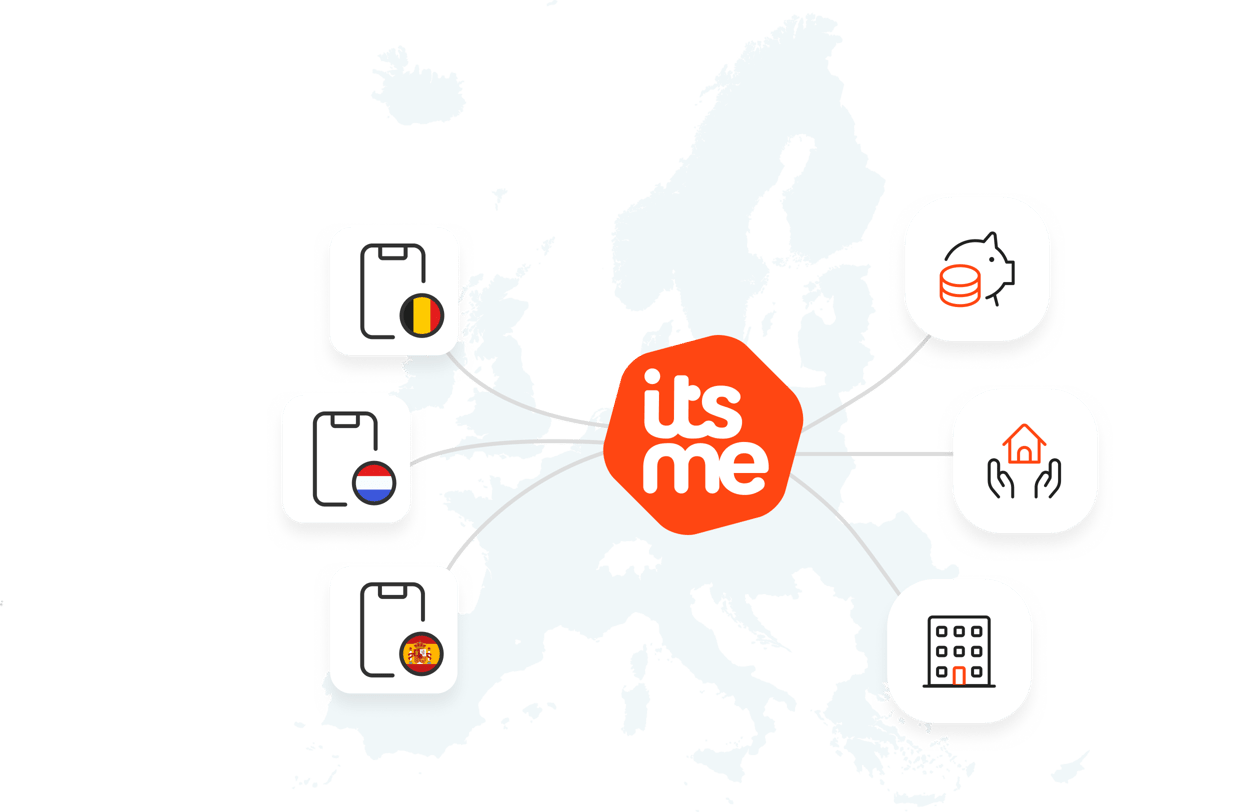
One integration gives you access to all accredited wallets across Europe, plus qualified trust services. All while staying compliant with eIDAS 2.0 and privacy‑by‑design principles.
one connection one connection

Why choose itsme as your EUDI Wallet intermediary?

One connection for cross-border identity interactions

Extend your itsme integration to access all EUDI wallets through a single connection. Built on nearly a decade of live identity infrastructure with 8M+ users, millions of transactions, thousands of integrations, the intermediary service extends your existing itsme setup to support the full EUDI Wallet ecosystem, with the same integration and experience.

cross border interactions cross border interactions

Built for compliance and trust

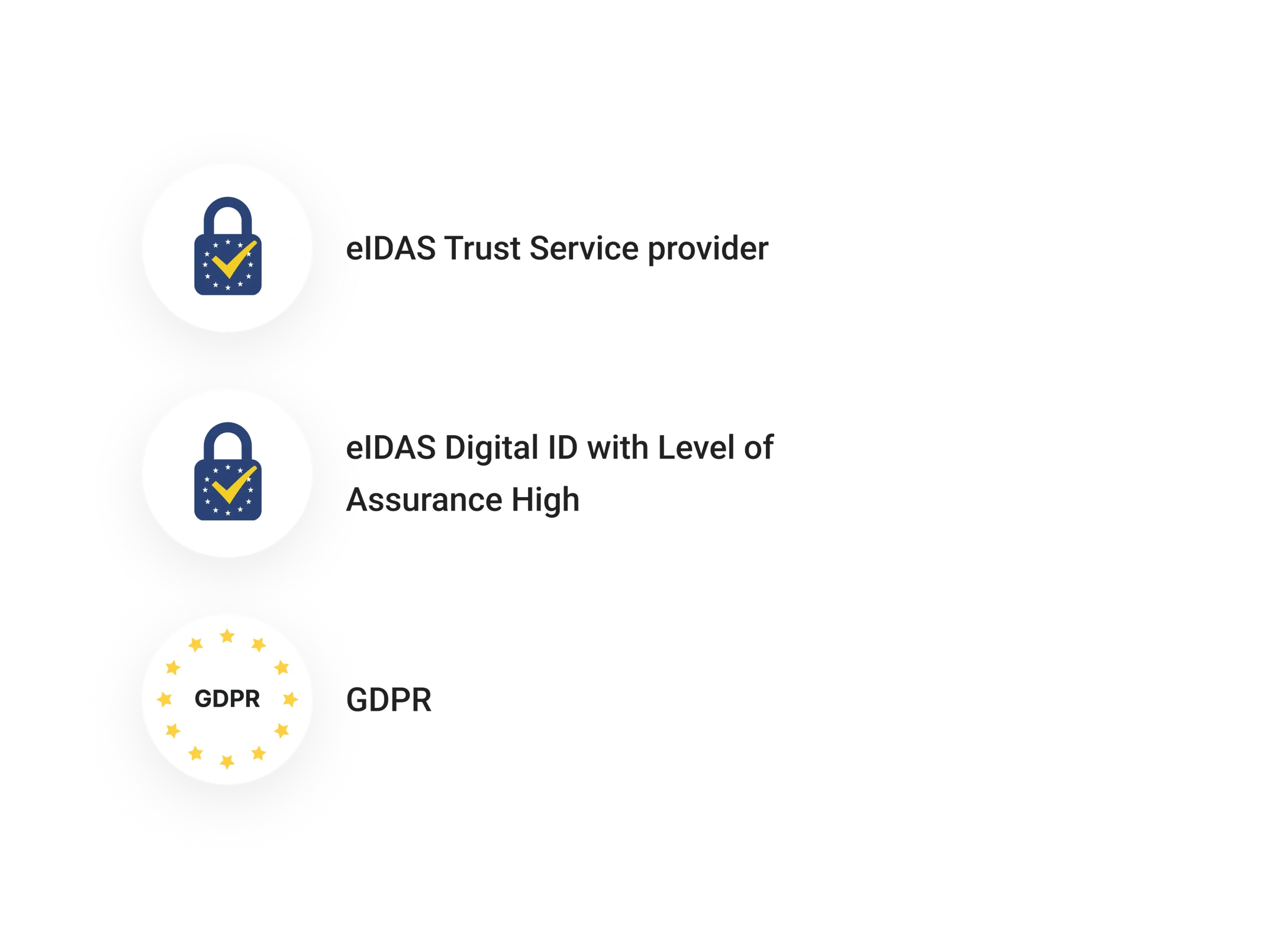
The service is designed to meet the requirements of eIDAS 2.0, GDPR, and upcoming EU implementing acts. itsme brings its own fraud detection and security operations layer to the EUDI Wallet ecosystem.
EU standards EU standards

A future‑ready foundation

As EUDI Wallet capabilities evolve (new credentials, new use cases, new trust frameworks), your integration evolves with it. itsme actively participates in eIDAS alignment bodies, WeBuild, and ETSI standardisation, so your integration stays ahead of regulatory developments.
future ready future ready

EUDI Wallet intermediary in action

Security_Vault

Data providers

Expose and store verified attributes, credentials, digital documents, cards and more to the EUDIW ecosystem and Wallets in a controlled, compliant manner to enable easy data sharing within the EU.

Company

Digital platforms and services providers

Access verified identity attributes and credentials from EUDIW wallets across borders without managing wallet-specific integrations, security, and regulatory complexity.

Frequently asked question

What is an EUDI Wallet intermediary?

As defined in the EUDI Architectural Reference Framework: “intermediaries form a special class of Relying Party. Article 5b (10) of the [European Digital Identity Regulation] states "Intermediaries acting on behalf of relying parties shall be deemed to be relying parties and shall not store data about the content of the transaction". Such an intermediary is a party that offers services to Relying Parties to, on their behalf, connect to Wallet Units and request the User attributes that these Relying Parties need. The intermediary then sends the presented attributes to the intermediated Relying Party. This implies that an intermediary performs all tasks assigned to a Relying Party in this ARF on behalf of the intermediated Relying Party.”

In short: intermediaries unburden you from the complexity of the ecosystem, by performing the obligations required (to be eIDAS 2.0 compliant) on your behalf.

What does an EUDI Wallet intermediary do?

An EUDIW intermediary connects organisations to the European Digital Identity Wallet ecosystem, handling trust, interoperability, and compliance requirements so parties can exchange identity data securely and efficiently. The itsme EUDIW Intermediary Service is a managed service that connects your organisation to the European Digital Identity Wallet ecosystem through a single integration. It abstracts the complexity of interacting with multiple wallets, protocols, PID formats, and issuers across Europe.

Why work with an intermediary instead of integrating wallets directly?

Direct integrations require managing multiple wallet specifications, protocols, and attribute formats that won’t be fully standardised. The itsme intermediary simplifies this by:

  • Providing one standardised integration
    Handling protocol translation and validation

  • Centralising compliance and trust management

This significantly reduces development effort and operational complexity.

What makes itsme different from a typical EUDI Wallet Intermediary?

While the regulatory intermediary role focuses on protocol-level interaction, itsme goes further by:

  • Providing end-to-end integration support, and 24/7 support.

  • Offering lifecycle management of attestations

  • Enabling advanced services like delegated EAA issuance and fraud risk support

This positions itsme as a full-service identity partner, not just a technical broker.

How does integration work for existing itsme customers?

If you are already integrated with itsme, you can continue using your existing OIDC integration, while gaining extra access to all accredited EUDI wallets.
Minimal changes will be required to support the use cases enabled by the EUDIW. Contact us for more information.

Is this service also available to non-itsme customer?

Absolutely, you can use the EUDIW Intermediary service as a standalone identity solution. The principle remains the same: you only need one integration to reach the whole EUDI Wallet ecosystem. Contact us and we will find together the right solution tailored to your needs.

Will my organisation be eIDAS 2.0 compliant by using this service?

Yes, the service is explicitly designed to align with eIDAS 2.0 roles, principles, and trust requirements, and to evolve alongside upcoming implementing acts.

  • The intermediary service is built in alignment with the eIDAS 2.0 Architectural Reference Framework and implementing acts. It manages amongst others:

  • Access and registration certificates
    Attribute validation and policy enforcement

  • Consent and data minimisation requirements

Which European wallets are supported?

All accredited wallets are supported. The service is designed to integrate all accredited (and to-be accredited at any point in time in the future) European Digital Identity Wallets via a single interface. For upcoming accredited wallets, we aim to always integrate them in their pre-production sandbox environment, so that there is the least amount of time between their accreditation and being supported through our interface to you (read: days and not months). By working with an intermediary, you won’t need to integrate each wallet separately and deal with the continuous operational cost. The list of accredited EUDI Wallets is available here.

What use cases are supported?

The service supports key EUDIW-driven use cases, including:

  • Customer onboarding (KYC / identification)

  • Secure login (Strong Customer Authentication)

  • Attribute sharing (PID, attestations)

  • Qualified electronic signatures (where supported)

itsme acts as a trust and interoperability layer. You remain in control of which data is requested, shared, or provided, within the boundaries of user consent and regulation.

How will the onboarding / KYC flow work with a EUDI Wallet?

It works by requesting a presentation of the verified Personal Identification Data (PID) in the wallet of the user. It is very similar as the Identification service that itsme offers today.

How will the secure login work for financial institutions with a EUDI Wallet?

It will work with a new type of attestation called the Strong Customer Authentication (SCA) attestation (also referred to as the Strong User Authentication (SUA) attestation). Your organisation will issue this attestation to the wallet of the user with our help where itsme acts as delegated issuer. We foresee endpoints for the (re)issuance, revocation, and verifying the status of the attestations of this attestation.

Will payments be supported by the EUDI Wallet?

The same SCA attestation supports login, validation of sensitive operations, and payments per PSD2 regulation.

Login: presentation request for issued SCA

Validation of sensitive operation: SCA + signing a risk-action Transactional Data Object with user the wallet

Validation of payment: signing and linking of a payment TDO to the SCA attestation in the wallet per TS12. Please note that the standards of how Wallet implementations should handle payment transactions are still under construction.

Upcoming additions of instrument-level SCA to support third-party-requested flows:

  • Payment Card

  • IBAN attestation

Ready to connect to the European Digital Identity Wallet?

Talk to an EUDIW expert and explore how the itsme EUDIW Intermediary can accelerate your journey into Europe’s digital identity ecosystem.