


By Admin on Mar 4, 2026
 1741676969-persbeeld-jaarcijfers-2024-1
Executive summary: identity-first onboarding at telecom scale
Belgium's largest telecom provider serves millions of customers while balancing a critical tension: protecting against rising phishing and credential-stuffing attacks without losing users to friction. Legacy systems and inconsistent customer data had made onboarding increasingly complex. The result was a fractured experience where new users dropped off during registration, and existing users struggled with passwords.
Proximus fundamentally rethought the approach. Together with itsme, the company rebuilt onboarding and authentication around verified digital identity. Forms, credentials, and manual checks were replaced with identity certainty from the first interaction.
1. The challenge: when security adds friction instead of trust
For Proximus, digital onboarding had become a paradox. To protect its millions of customers against phishing, fraud, and credential stuffing, the provider kept increasing its security requirements. But every added check – invoices, activation codes, SMS verifications – introduced more friction. They ended up with a 10-step registration flow where many users dropped off before completion. The biggest friction point occurred when users were asked for invoice credentials – data most customers didn't have readily available.
The challenge was compounded by Proximus' diverse customer base and data quality issues inherited from legacy systems. Over the past 2 years, credential stuffing and phishing attacks had surged, making password-based logins increasingly vulnerable despite SMS-based one-time passwords being added as an extra layer.
2. The shift: identity comes first
Proximus had first integrated itsme® seven years earlier, but only as a secondary login option. Users still had to create accounts manually before linking their identity. In January 2026, the team launched a fundamentally different approach: identity comes first and everything else follows. Instead of asking users to prove who they are step by step, Proximus now starts every journey – whether signing up or signing in – with a verified digital identity.
The new flow removes entire verification steps while increasing certainty about every account:
-
Identify the user with itsme
-
Link that verified identity to the correct Proximus account
-
Authenticate without passwords
3. The build: what changed behind the scenes
To enable identity-first onboarding across legacy systems, Proximus built a Personal Identification and Authentication Service (PIAS). PIAS acts as the secure bridge between itsme® and Proximus' customer data. It collects verified attributes and automatically matches them to the correct customer record across multiple service lines – even where email addresses or phone numbers were historically incomplete or inconsistent.
The architecture was designed to be modular: "Because itsme® is completely OpenID Connect-based, we could build PIAS as a centralized identification point," notes Dusty Saman. "We can now plug in new endpoints without breaking existing flows. The result is a future-proof identity foundation that scales across platforms and use cases.”
Technical highlights
-
Standards-based integration using OpenID Connect (OIDC)
-
Centralised identification layer replacing multiple legacy flows
-
Strong authentication tokens instead of password dependencies
-
Phased rollout: registration first, followed by migration of existing accounts
-
Unified identity layer across the MyProximus customer platform and Proximus+, Pickx and Doktr apps
4. The impact: frictionless security at scale
What changed for users
Before itsme®, everyday interactions were slowed down by small but frequent obstacles: forgotten passwords, misplaced usernames, error messages, and mobile-unfriendly password resets that often led to abandonment. This unified identity approach eliminated friction points for both new and returning subscribers:
-
No searching for invoices or activation codes
-
No manual form filling or profile creation
-
No passwords to remember or reset
-
No device-switching mid-flow
What changed for Proximus
By starting every journey with verified digital identity, Proximus replaced fragmented verification steps with a single, trusted identification moment.
-
Registration flows shortened from up to 10 steps to a streamlined identity-based process
-
Manual verification, SMS codes, and password dependencies removed
-
Identity certainty established before accounts and services are linked
This resolves the long-standing trade-off between usability and security.
Ready to remove friction from secure onboarding and login?
Discover how identity-first onboarding with itsme® helps high-volume platforms combine security, conversion, and user trust.
-2.jpg?width=1120&height=587&name=042025_NewsLetter_Image01%20(1)-2.jpg) Van Breda Health Care
Van Breda Health Care
Vanbreda Health Care modernises user access with itsme
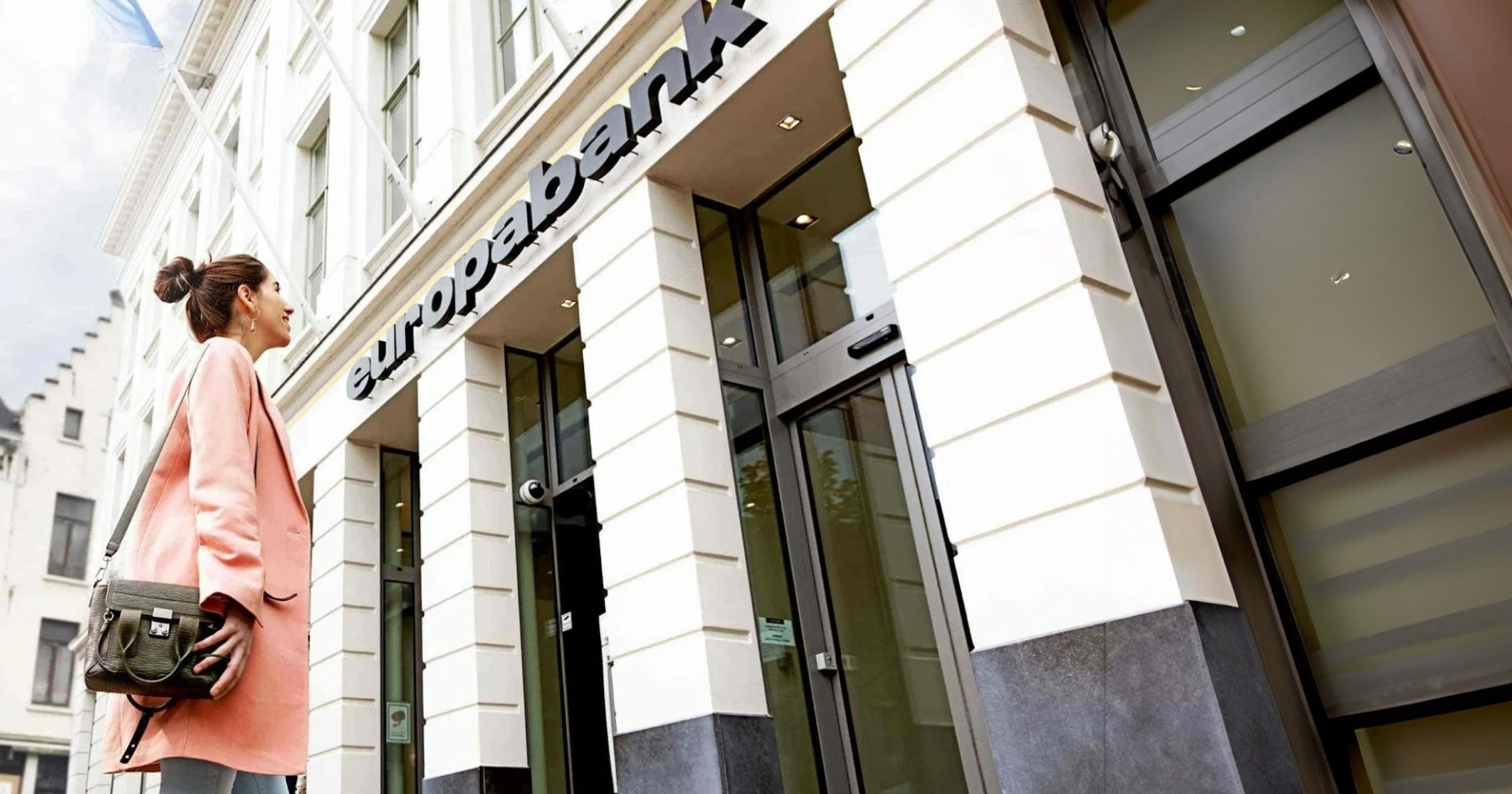 1740498462-blogpost_europabank-2
How Europabank made digital signing the default
/1600x900_1743432028-mask-group-1.webp?width=1600&height=900&name=1600x900_1743432028-mask-group-1.webp) 1600x900_1743432028-mask-group-1
1600x900_1743432028-mask-group-1